- Home Page /
- Electronics /
- Computer Accessories /
- Computer Components /
- Single Board Computers /
- ESP8266 Type C ESP-12 ESP-12F NodeMcu Mini D1...
0 ratings


Item #:
40736734
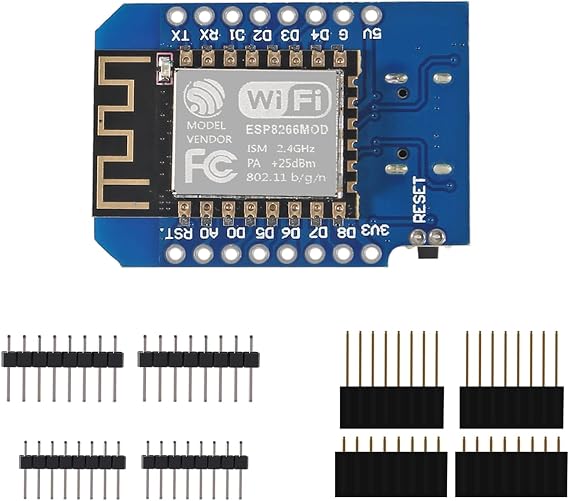
ESP8266 Type C ESP-12 ESP-12F NodeMcu Mini D1 Module WeMos Lua 4M Bytes WLAN WiFi Internet Development Board with Type C USB Connection
85% of respondents would recommend this to a friend
Item #:
40736734
€ 14
Price Details
Excluding Shipping & Custom charges ( Shipping and custom charges will be calculated on checkout )
*All items will import from US
0 ratings
Write a review
In stock
 Imported from USA store
QTY:
Order now and get it around Friday, October 02
Secured transaction
Ubuy works hard to protect your security and privacy. Our advanced payment security system ensures confidentiality by encrypting your information during transmission using AES (Advanced Encryption Standards) and SSL (Secure Socket Layer) protocols. Your payment details are 100% secure as we do not share your payment details with third party sellers.
Our Top Logistics Partners


ESP8266 d1 with a small and convenient size, this development board based on ESP-12F ESP8266, can help your project save space.

Fast
Shipping

Free
Return*

Secure Packaging

100% Original Products

PCI DSS Compliance

ISO 27001 Certified



Note: Step Down Voltage Transformer required for using electronics products of US store (110-120). Recommended power converters Buy Now.


What Stands Out
High Memory Capacity
Boasts 4M bytes of flash memory, providing ample storage for complex applications and efficient programming, making it an ideal choice for developers and hobbyists.
Seamless WiFi Integration
Offers reliable WLAN connectivity through the ESP8266 chip, ensuring robust internet access for IoT projects, making it a favorite among tech enthusiasts.
Versatile Compatibility
Designed to be fully compatible with the WeMos WiFi module, enabling easy integration and expanding development possibilities for a range of Internet-based applications.
Product Details
| Memory Storage Capacity | 4 MB |
| Connectivity Technology | I2C, USB, WLAN, Wi-Fi |
| Processor Brand | Espressif |
| Wireless Compability | 802.11n |
| Processor Count | 1 |
| Total Usb Ports | 1 |
| Brand | DORHEA |
| Model Name | ESP8266 Type C ESP-12 ESP-12F NodeMcu Mini D1 Module |
| Number of Items | 1 |
| UPC | 687117723505 |
| Unit Count | 1 Count |
| Manufacturer | DORHEA |
| Mfr Part Number | DA11918-1 |
| CPU Manufacturer | Espressif |
| Item Weight | 0.5 lbs (230 grams) |
Who Should Buy?

-
Hobbyist Developers
Ideal for hobbyists looking to create DIY IoT projects with WiFi connectivity and easy programming.
-
Educational Institutions
Perfect for schools teaching electronics and coding, due to its simplicity and affordability.
-
Prototype Builders
Great for professionals needing a development board for rapid prototyping of wireless applications or products.

-
High-End Applications
Unsuitable for complex applications requiring advanced processing power or higher memory capacities.
Product Description
ESP8266 Type C ESP-12 ESP-12F NodeMcu Mini D1 Module WeMos Lua 4M Bytes WLAN WiFi Internet Development Board with Type C USB Connection
Have any Query? Chat with us
Customer Questions & Answers
-
Question:
How to Shop ESP8266 Type C ESP-12 ESP-12F NodeMcu Mini D1 Module Online From Ubuy?
Answer: It’s easy to shop ESP8266 Type C ESP-12 ESP-12F NodeMcu Mini D1 Module online from Ubuy. You just have to search for the product, choose your shipping method while checking out and get it delivered to your location. -
Question:
Is ESP8266 Type C ESP-12 ESP-12F NodeMcu Mini D1 Module Available to Shop Online in Malta?
Answer: Yes, at Ubuy Malta this product is available for you to shop at a reasonable price. The ESP8266 Type C ESP-12 ESP-12F NodeMcu Mini D1 Module is not available locally but you can trust us with our express shipping services. -
Question:
How Long Does It Take to Get Product After Placing the Order?
Answer: The delivery time of your ordered product varies as per what you've ordered and the shipping method that you've chosen. The estimated delivery time is mentioned during the checkout process, so be carefree while shopping.
DORHEA Single Board Computers Editorial Review
The ESP8266 Type C ESP-12 ESP-12F NodeMcu Mini D1 Module is an impressive development board featuring 4 MB of memory storage capacity and various connectivity options including I2C, USB, and WLAN. Its 802.11n wireless compatibility and single processor from Espressif ensure robust performance for your projects. Users appreciate the Type C USB connection which provides a modern interface for easier connectivity. Additionally, its lightweight design at just 0.2 lbs makes it highly portable, perfect for on-the-go development. Overall, this module stands out for its versatility and user-friendly features, suitable for both novice and advanced users alike.
Customer Reviews & Ratings
1 customers ratings
-
5 Star
0%
-
4 Star
100%
-
3 Star
0%
-
2 Star
0%
-
1 Star
0%
Review this product
Share your thoughts with other customers
Pros
- 4 MB memory for extensive projects
- Supports multiple connectivity technologies
- Lightweight design for portability
- Easy integration with development environments
- Ideal for IoT applications
Cons
- Limited to one USB port for connectivity
Product Price History
Important information
- Limitations : For products shipped internationally, please note that any manufacturer warranty may not be valid; manufacturer service options may not be available; product manuals, instructions, and safety warnings may not be in destination country languages; the products (and accompanying materials) may not be designed in accordance with destination country standards, specifications, and labeling requirements; and the products may not conform to destination country voltage and other electrical standards (requiring use of an adapter or converter if appropriate). The recipient is responsible for assuring that the product can be lawfully imported to the destination country. When ordering from Ubuy or its affiliates, the recipient is the importer of record and must comply with all laws and regulations of the destination country.
- Not all the products listed on Ubuy are for sale, as Ubuy is a global search engine. Products are subject to export/trade regulations.
€ 14
Order now and get it around Friday, October 02
This item is not restrict in my country.(Please click on above link if this item is not restrict in your country, So our team will review and allow.)
QTY:
Secured transaction
PCI DSS compliant and ISO 27001:2022 certified, with encrypted payments and full buyer protection on every order.
Our Top Logistics Partners
Fastest cross-border delivery
Features & Benefits
- Mini NodeMcu Lua WiFi board based on ESP-8266EX
- 11 digital input/output pins with interrupt/pwm/I2C/one-wire
- Support OTA online
- 1 Type C USB connection
- 1 analog input (3.3V max input)
- 5V 1A switching power supply onboard
Ubuy Assurance
Experience worry-free shopping with 100% original products, PCI DSS-compliant payment security, ISO 27001-certified data protection, the fastest cross-border delivery, free returns *, and secure packaging on every order.